How to Clean a NeeDoh
Wash a NeeDoh by hand with mild soap and cool or lukewarm water, rinse until the shell stops feeling soapy, then leave it to dry. That covers a Classic NeeDoh, a Nice Cube and every other smooth-shelled model in the range.
What happens after the wash is where people run into trouble. An opaque toy that still feels tacky takes a tiny dusting of cornstarch. Powder on a clear model wrecks the transparency you were trying to protect, so a Nice Cube or a Dream Drop gets left alone.
Cloudiness is a separate problem with a separate answer. Soap lifts dirt and skin oil off the surface, and it cannot polish out thousands of microscopic marks in the outer skin. An old cube can stay hazy while being perfectly clean.
The photos below run through both jobs: the ordinary wash in steps 1 to 4, then the popular one-drop oil trick in steps 5 to 9. Those are two different things. Soap cleans it. Oil only changes how the scratched surface looks.
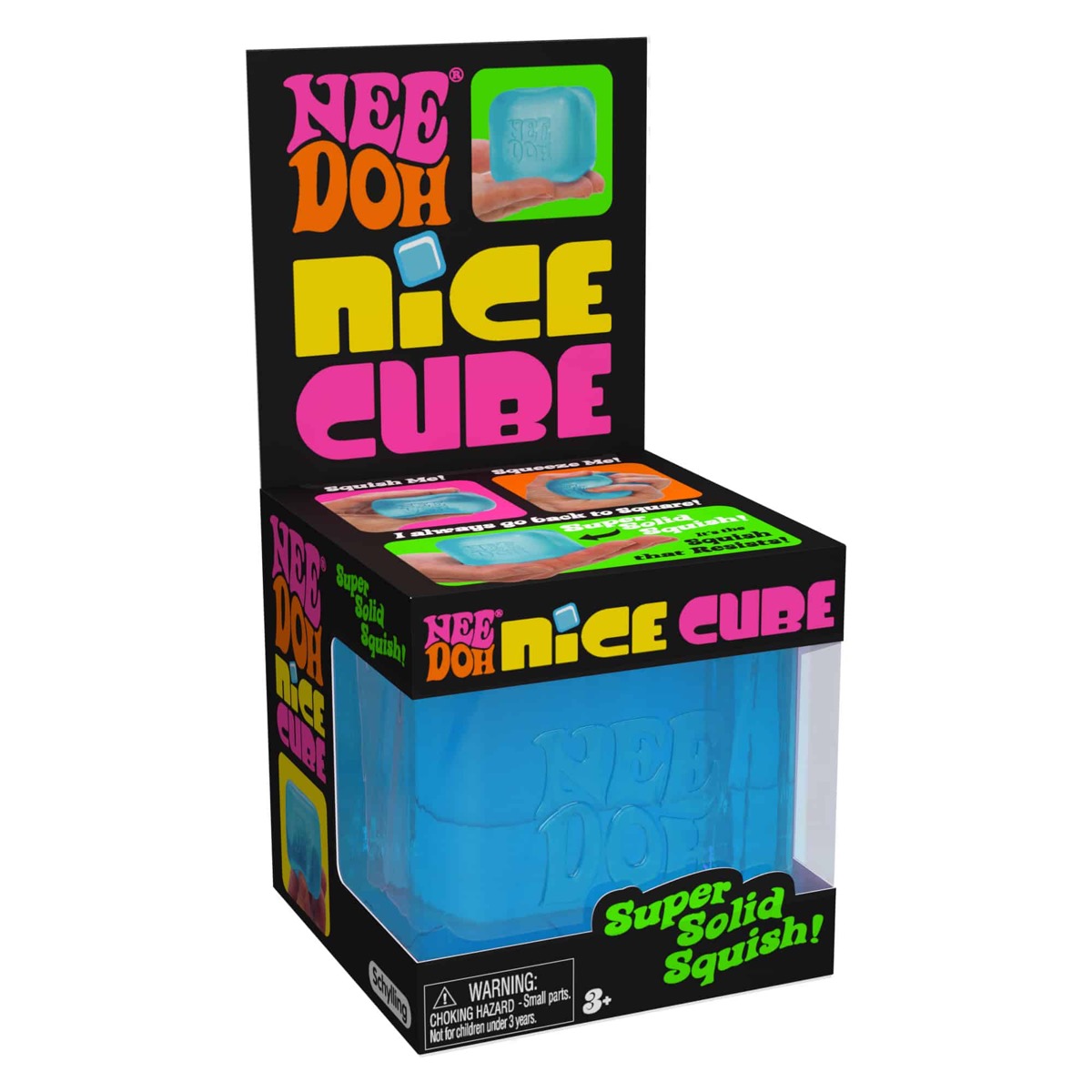
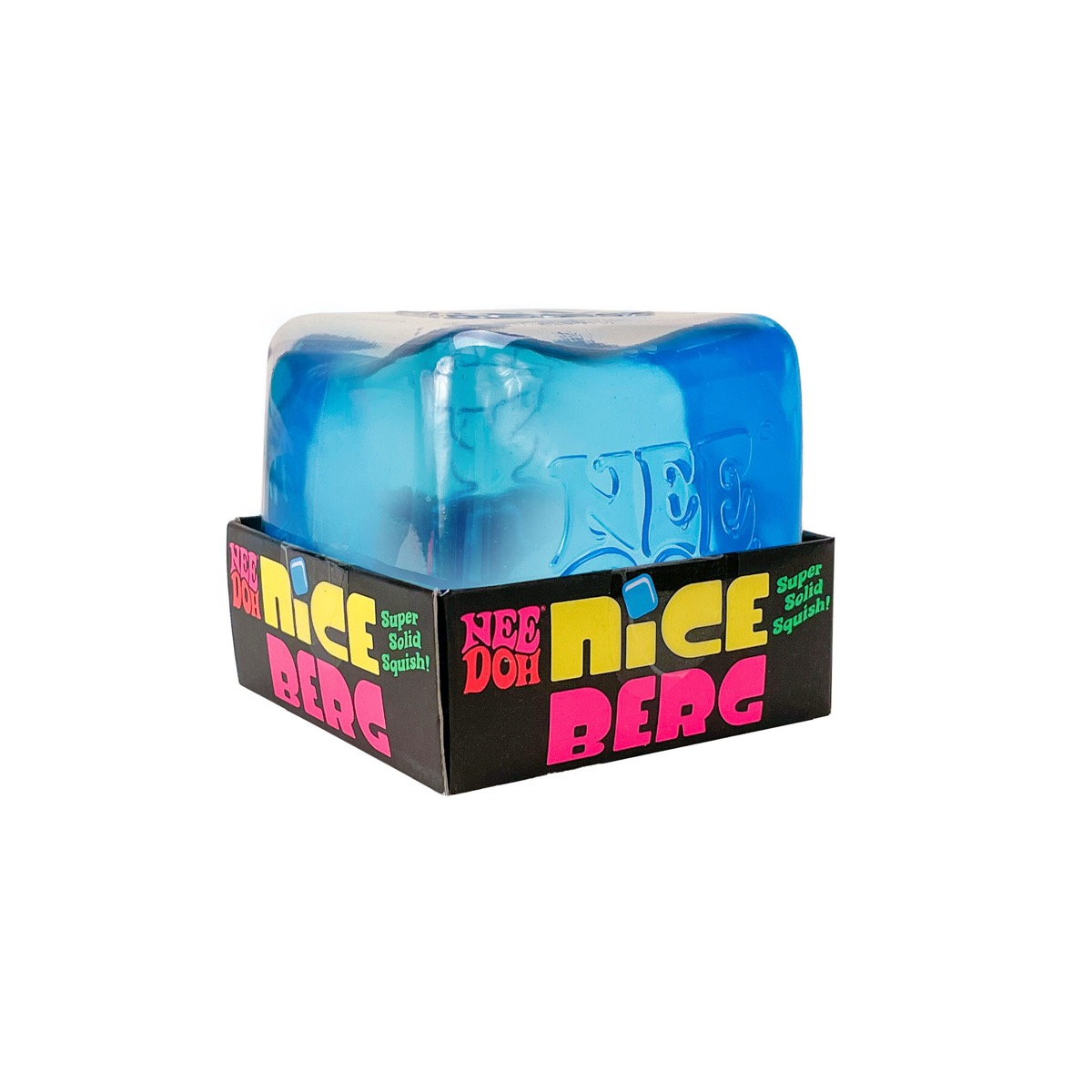
The Best Way to Clean a NeeDoh
Water, mild soap and a clean towel cover it. Nothing stronger belongs anywhere near the toy.
- Soak in clean water. Cool or slightly warm, straight from the tap. A quick dip wets the whole shell, and there is no benefit to leaving it under for ten minutes.
- Add a small amount of mild soap. One drop handles a Nice Cube. Plain liquid hand soap beats anything scented or abrasive.
- Wash the shell with your fingers. Work the soap over every face and around the molded logo. Fingertips clean soft rubber without scratching it.
- Dry it. Blot off the bulk of the water with a clean towel, then leave the toy out until the surface is dry to the touch.
Rinse properly before you dry. Soap left behind sets into a film that feels odd under the fingers, and on a transparent shell it passes for haze.
Skip the hair dryer and skip hot water. Heat is what ruptures a sealed squish toy, and nothing about cleaning one requires it.
Those four steps cover the whole smooth-shelled range: a Classic NeeDoh ball, a Nice Cube, a Dream Drop, Cool Cats and the rest. What changes between models is the shape rather than the method. A molded toy like a Cool Cat has ears and legs where dirt settles, so work the soapy water into them with a fingertip instead of expecting a rinse to reach.
Fingertips only, whichever one you own. A single pass with a kitchen scrubber puts more fine marks into a transparent shell than months of ordinary handling, and a fingernail dug into a molded face is how a shell gets opened in the first place.
Fuzzy and flocked versions are a different surface entirely. A fabric-like coating does not take the soak-and-rub method just because the toy underneath carries the Nee Doh name.
The word soak in step 1 means a dip, not a long bath. Dirt comes off during the soap step, so once the shell is wet, waiting achieves nothing. A fast wash also puts the seams and the shell in front of your eyes while the toy is in your hand, which is when a thin spot is easiest to catch.
The Oil Trick for a Cloudy Nice Cube
Steps 5 to 9 are optional, and they only apply to a clear model that is already clean. An opaque ball or a Cool Cat has no clarity to restore, so those stop at step 4. Oil removes no dirt at all. It hides fine scratches in a transparent shell for a while, which is cosmetic rather than curative.
- Add one drop of oil. Any more than that only makes the cube greasy.
- Rub the oil everywhere. Spread it into a very thin film across the whole surface.
- Add new water. Fresh water in the sink, because the old water is full of what you just washed off.
- Take most of the oil off. The cube should not be dripping by the time you stop.
- Dry it a little, not fully. Blot lightly instead of rubbing the shell dry. A trace left behind is the whole point.
The difference photographs dramatically and fades in ordinary use. Reapplying it is the price of keeping the effect, and the coating collects dust in the meantime.
Save it for a situation where appearance beats having a completely dry toy, such as photographing an older cube. Daily use stops at soap and water.
Never substitute essential oil or hand sanitizer for plain oil. That turns a controlled optical trick into an uncontrolled chemistry experiment on a soft polymer whose exact blend is not published.
A freshly oiled cube also feels slick, and a slick surface is one of the tells in our fake vs real NeeDoh guide. Worth remembering before you panic about a toy you oiled yourself.
How to Clean a NeeDoh Without It Getting Sticky
Let it dry before deciding the wash made things worse.
Clean thermoplastic rubber grabs at your fingers more than the same shell wearing a microscopic layer of skin oil and dust. Soap strips that layer away. Leftover soap adds a tackiness of its own, which is why the rinse deserves as much attention as the wash.
Cornstarch fixes ordinary surface tack on an opaque model. Rub a pinch over the dry shell, then knock off whatever does not stay attached. Baby powder does the same job at the same price.
The powder works mechanically. It sits on the surface and drops the friction against your skin, without repairing anything underneath.
Clear models are the exception. Cornstarch reduces tack on a Nice Cube too, and the particles destroy the glass-like look in the process, so a transparent shell is better left clean, dry and slightly grippy.
Tack spread evenly across the whole outside is a surface condition. One wet spot that keeps coming back is not, so check that area closely for a pinhole, a split or a patch that has thinned out.
Once filling escapes, you are cleaning up rather than maintaining. Scoop the loose material off dry, bin it, then take a damp cloth and a little soap to whatever it touched. A leaking toy is finished, and what comes out of it depends on the model, which our guide to what is inside a NeeDoh goes through one by one.
Why Does a Nice Cube Turn Cloudy?
Most stubborn haze on a well-used clear cube is surface wear rather than dirt.
A transparent material looks clear when light passes through it without scattering much. Roughen the surface and tiny irregularities scatter more of that light, so the material starts to read as milky. Scratched clear plastic goes white for the same reason.
A Nice Cube spends its life pressed against fingernails and desk edges. Each contact is trivial on its own. Added together, they change the optical surface.
Why Did My Nice Cube Turn Cloudy After Washing?
Washing almost never causes it. Water sits in the fine texture of a worn shell and stops it scattering light, so the cube looks its best while it is still wet and frosts over again on the way to dry.
That gives you a free test. Rinse the cube, look at it wet, then look again once the surface has dried. A cube that swings between clear and cloudy is telling you the haze sits on the outside.
A cube that stays cloudy while wet is a different story. That haze lies deeper in the material or inside the toy, and cleaning the outside will not touch it.
How to Make a Cloudy NeeDoh Clear Again
Cleaning a cloudy Nice Cube is easy. Making a heavily worn one look factory-new again is not something washing can do.
Start with soap and water, because real grime should come off before you judge what is left. Once the cube is clean and dry, look at what remains.
Fine surface wear responds to a microscopic film of oil. The oil fills irregularities that normally hold air, which reduces the optical difference at the scratched surface. The marks are still there.
That is why a social video can take an old milky cube and make it look new inside ten seconds, and it is also why the result does not last.
Abrasives are worse than useless. Plastic polish and toothpaste both work by removing material, which is reasonable on a thick acrylic panel and a bad idea on a stretchable skin holding a dense filling.
A uniformly frosted old cube that still feels right and has no weak spots has nothing functionally wrong with it. Where crystal clarity matters more than keeping that particular one, replacement is the only real reset.
What Soap Should You Use?
Mild liquid soap, and not much of it. One small drop handles ordinary dirt on a single toy.
Dish soap qualifies as long as it is a gentle one. Anything without bleach or abrasive particles will do. Scented and moisturizing versions add ingredients that have to be rinsed off again for no cleaning benefit.
Solvents have no place on a NeeDoh. Alcohol and acetone expose a soft polymer shell to chemistry it was never designed for, and they remove nothing that soap has left behind.
Disinfecting wipes belong in the same category. One wipe will not dissolve a toy in your hand, and repeated chemical treatment is unnecessary when soap already handles ordinary dirt.
A shared classroom or therapy NeeDoh that needs real disinfection after contamination is better replaced, or reassigned to one person, than soaked in sanitizer week after week.
Can You Put a NeeDoh in the Washing Machine or Dishwasher?
No to both.
A washing machine adds long soaking, detergent and mechanical force. Heat makes a dishwasher worse still, since heat is the one thing that reliably ruptures these toys.
Neither solves anything a one-minute hand wash does not solve better. Being waterproof enough for the sink does not make a sealed Nee Doh laundry.
What If the Dirt Will Not Come Off?
Stop escalating the cleaner.
Ink and dye transfer can stain thermoplastic rubber rather than sit on top of it. When mild soap will not move a mark, alcohol and abrasive scrubbing tend to damage the surface before the stain gives up.
A stained NeeDoh that is otherwise intact squeezes exactly the same as it did before. A chemically softened one does not improve just because the mark is gone.
How to Keep a NeeDoh Clean Longer
Clean hands do more than frequent deep cleaning.
A Nice Cube handled right after a meal picks up oil immediately. A Classic tossed loose into a backpack comes back wearing the lint. Keeping the toy in a drawer or a case cuts down how often it sees the sink at all.
Wash a Nee Doh when it needs it rather than on a schedule. Five washes in one week accomplish nothing if the toy was already clean.
Keep clear cubes off rough surfaces when transparency matters. Dirt washes off. Surface wear does not.
Clean It, Do Not Polish It to Death
Most dirty NeeDohs need less work than the internet suggests.
Soap removes hand oil and dirt. Cornstarch brings back the dry feel of an opaque shell. Clear models need the gentlest handling of all, because every scratch shows through them.
A little haze does not stop the squeeze. A shell that has started leaking or splitting does, and that toy is due for replacement rather than another cleaning session.
Shop Authentic NeeDoh
A genuine shell survives years of washing without turning gummy or coming apart at the seam, which is the difference that shows up two months after the purchase rather than on the day.